
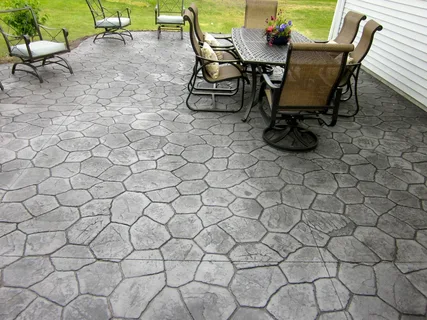
Stamped concrete has become one of the most popular choices for homeowners who want the look of brick, stone, slate, or tile—without paying the high material and installation costs. From patios and walkways to driveways and pool decks, stamped concrete brings beauty and versatility to outdoor spaces.
But with all its benefits, it’s important to understand that stamped concrete also has a few downsides. Knowing these drawbacks helps you make the right choice for your home, budget, and long-term maintenance expectations.
Below, we break down the main disadvantages of stamped concrete, why they happen, and how to reduce their impact.
1. Cracking Over Time Is Common
One of the biggest downsides of stamped concrete is its tendency to crack over time. Concrete naturally expands and contracts due to weather changes. Even with proper installation, stamped concrete can develop cracks from:
- Freeze–thaw cycles
- Heavy foot or vehicle traffic
- Soil movement beneath the slab
- Improper base preparation
- Excessive weight
While small hairline cracks are mostly cosmetic, they can still affect the appearance—especially when you’re going for a seamless, stone-like finish. Repairing stamped concrete cracks is possible, but the patch rarely matches the original pattern and color perfectly, making repairs more noticeable.
2. Surface Can Become Slippery When Wet
Stamped concrete is often sealed to protect the surface and enhance its color. However, that glossy sealant can create a slippery finish, especially on pool decks, walkways, or areas frequently exposed to rain.
This slippery effect becomes worse when:
- The pattern has shallow texture
- The sealer is high-gloss
- The concrete has algae or dirt buildup
Non-slip additives can help, but even with them, stamped concrete is still more slippery than pavers, textured stone, or broom-finished concrete.
3. Color Fading & Discoloration
Stamped concrete gets its color from surface pigments, integral color, or stains. Over the years, exposure to UV rays, weather, moisture, and foot traffic can lead to:
- Fading
- Uneven color patches
- Dull appearance
- Visible wear spots
Because stamped concrete heavily relies on color for its decorative appeal, fading can significantly impact its beauty. Restoring the color often requires resealing, tinting, or staining—which means more maintenance and cost.
4. Requires Regular Sealing
Stamped concrete must be sealed every 2–3 years to maintain its durability and appearance. Without sealing, the surface becomes vulnerable to:
- Stains
- Moisture penetration
- Surface wear
- Freeze–thaw damage
- Fading
Skipping regular sealing dramatically shortens its lifespan and leads to faster deterioration. The ongoing maintenance is something many homeowners don’t consider during the initial installation.
5. Repairs Are Difficult & Expensive
Unlike pavers, where individual stones can be replaced easily, stamped concrete is a single solid slab. If damage occurs—cracking, chipping, scaling, or sinking—you can’t simply replace one section without affecting the overall look.
Repairs are challenging because:
- Matching the original color is difficult
- Recreating the same stamp pattern is nearly impossible
- The repaired section often stands out
- Large cracks may require resurfacing the entire area
In some cases, homeowners end up replacing the whole slab, making repairs more costly compared to alternative materials.
6. Surface Flaking or Scaling
Stamped concrete is particularly susceptible to surface flaking when exposed to harsh weather conditions or poor installation. Scaling usually happens when moisture gets trapped in the surface layer and freezes, causing it to peel or flake off.
This is common in regions with:
- Cold winters
- Freeze–thaw cycles
- Use of de-icing salts
Once flaking begins, it’s difficult to stop, and the only solution may be resurfacing the concrete—another added expense.
7. Sensitive to Heavy Loads
Stamped concrete looks strong, but it’s not always suitable for:
- Heavy trucks
- RV parking
- Dumpsters
- Large equipment
Heavy loads can cause cracking or sinking, especially if the base wasn’t properly compacted. While driveways can be poured thicker, stamped concrete still isn’t as durable under extreme weight as pavers or reinforced stone.
8. Installation Requires Expertise
Stamped concrete isn’t a DIY-friendly project. Proper installation requires:
- Professional concrete mixing
- Correct timing for stamping
- Skilled finishing
- Knowledge of patterns and coloring
- Experience with surface sealing
If the contractor lacks skill or experience, the results can be:
- Uneven patterns
- Incorrect color distribution
- Poorly placed joints
- Premature cracking
Choosing the wrong installer is one of the biggest downsides because stamped concrete is unforgiving—once poured, mistakes can’t be undone.
9. Potential for Surface Heat Retention
Stamped concrete absorbs heat quickly, especially darker colors or stone-like designs. This can make the surface uncomfortably hot during summer, particularly around pools or patios where people typically walk barefoot.
Materials like pavers, travertine, and natural stone stay cooler in comparison, making them more comfortable in hot climates.
10. Higher Upfront Cost Than Regular Concrete
While stamped concrete is cheaper than natural stone, brick, or pavers, it is still more expensive than standard concrete. Extra costs come from:
- Decorative stamping
- Custom coloring
- Sealers
- Labor skill requirements
This makes stamped concrete a mid-range choice—not the most expensive, but not the budget-friendly option many assume.
Final Thoughts: Is Stamped Concrete Worth It?
Stamped concrete is beautiful, customizable, and durable when installed and maintained properly. However, it does come with several downsides:
- It cracks and fades over time
- Requires frequent sealing
- Can be slippery
- Hard to repair
- Sensitive to weather conditions
- Can be costly to maintain
If you want low maintenance and easy repairs, pavers or natural stone may be a better option. But if you love the artistic look of stamped surfaces and don’t mind regular upkeep, stamped concrete can still be an excellent investment.